
Hi, I'm Dante Fuller. I live in Utah. Craig "The Water Guy" Phillips asked me to share my homeowner experience with local tap water from the city and the SoftPro ECO™ City Water Softener - Best Water Softener Systems for City Water I purchased. This is how my adventures played out. I hope this helps you in your decision.
The Hard Water Problem That Started It All
Did you know that even "treated" city water can contain minerals that wreak havoc on your home?
I learned this the hard way after moving to my current neighborhood in Utah six months ago. What I initially dismissed as "normal wear" on my appliances quickly revealed itself as something much more problematic.
The first sign appeared on my glassware. Despite running everything through my dishwasher's "heavy duty" cycle, wine glasses and coffee mugs emerged with stubborn white spots that seemed impossible to remove. I tried different detergents, rinse aids, and even hand-drying everything immediately after washing. Nothing worked.
But the real wake-up call came when I noticed my skin feeling unusually dry and itchy after showers. My wife complained that her hair felt "straw-like" despite using expensive conditioners. We initially blamed the dry Utah climate, but when our neighbors mentioned similar issues, I started investigating our water quality.
The culprit was hard water - specifically, calcium and magnesium minerals that our municipal treatment facility couldn't economically remove. At 18 grains per gallon, our water hardness level fell into the "very hard" category according to the Water Quality Association standards. These dissolved minerals were forming scale deposits throughout our plumbing system and interfering with soap's ability to clean effectively.
I tested our incoming water with a basic TDS meter and found 320 parts per million of total dissolved solids. While not dangerous, this mineral content was costing us money through increased soap usage, shortened appliance lifespans, and the need for specialized cleaning products just to maintain basic cleanliness.
Research Phase: Why I Chose SoftPro
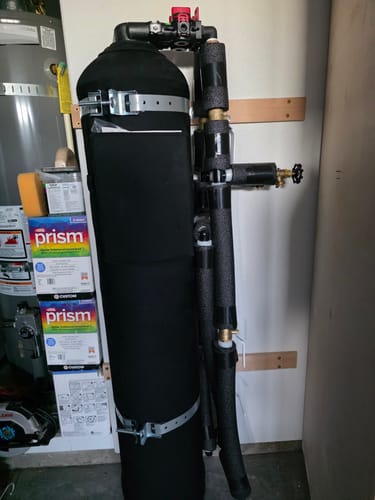
After identifying hard water as our problem, I spent three weeks researching water softening technologies. The science behind ion exchange fascinated me - essentially, specialized resin beads act like molecular magnets, attracting calcium and magnesium ions while releasing sodium ions in their place.
I considered several approaches: salt-free water conditioners, reverse osmosis systems, and traditional salt-based softeners. Salt-free systems seemed appealing initially, but deeper research revealed they don't actually remove hardness minerals - they just change their structure to reduce scale formation. For our severe hardness level, I needed water softener system actual mineral removal.
Reverse osmosis would remove everything, but the water waste concerned me. These systems typically reject 3-4 gallons for every gallon of treated water produced. In drought-conscious Utah, this seemed irresponsible for whole-house treatment.
Salt-based ion exchange systems emerged as the most practical solution for our situation. They efficiently remove hardness minerals, operate with minimal water waste, and provide consistent results regardless of incoming water chemistry variations.
When evaluating specific products, I focused on four key criteria: regeneration efficiency, build quality, capacity sizing, and long-term operational costs. The SoftPro ECO caught my attention because of its demand-initiated regeneration system and high-efficiency resin bed design.
Unlike timer-based systems that regenerate on predetermined schedules regardless of actual water usage, the SoftPro ECO monitors water consumption and initiates regeneration only when the resin bed approaches capacity. This matched my preference for efficient resource usage and lower operating costs.
Unboxing and First Impressions
The SoftPro ECO arrived in sturdy packaging with detailed foam protection around all components. Everything appeared professionally packaged with clear labeling and organization. The main unit felt substantially built - heavier than I expected at approximately 150 pounds fully loaded with resin.
The fiberglass tank construction impressed me immediately. Unlike some plastic alternatives I'd seen, this felt durable enough for decades of service. The SoftPro Valve mounted on top appeared well-engineered with clear, intuitive controls and a digital display showing system status.
Documentation quality exceeded my expectations. The installation manual included detailed diagrams, troubleshooting guides, and maintenance schedules. Even the warranty information was clearly presented with specific coverage details for different components.
Component inspection revealed attention to detail throughout. The bypass valve felt solid and operated smoothly. Internal distribution tubes showed proper sizing for even flow distribution. The resin bed consisted of high-capacity ion exchange media designed for extended service life.
One pleasant surprise was the inclusion of installation hardware I hadn't expected - pipe fittings, mounting brackets, and even basic tools for setup. This suggested the manufacturer understood real-world installation challenges and wanted to support successful customer experiences.
Installation Experience and Setup

I chose professional installation despite having moderate plumbing skills. The complexity of properly integrating the bypass system, drain connections, and electrical components convinced me that professional setup would ensure optimal performance from day one.

My installer arrived with all necessary tools and completed the job in approximately four hours. The process involved installing the bypass valve assembly on our main water line, connecting the drain line to our utility sink, and establishing the electrical connection for the SoftPro Valve control system.
Location planning proved crucial. We positioned the unit in our basement utility room with adequate clearance for salt loading and maintenance access. The installer emphasized proper drain line sizing and slope to ensure efficient regeneration cycle completion.
Initial programming required entering our water hardness level, household size, and iron content (if present). The SoftPro ECO's microprocessor uses this information to calculate optimal regeneration timing and salt dosage for maximum efficiency.
The first regeneration cycle began immediately after programming completion. This initial cycle lasted approximately 90 minutes and consumed about 50 gallons of water plus two pounds of salt. The process operated quietly with only subtle sounds during different cycle phases.
Water pressure testing after installation showed minimal impact on flow rates. At our main bathroom shower, I measured only a 3 PSI reduction from the 55 PSI municipal supply pressure - well within acceptable ranges for normal household activities.
Performance Testing and Real Results
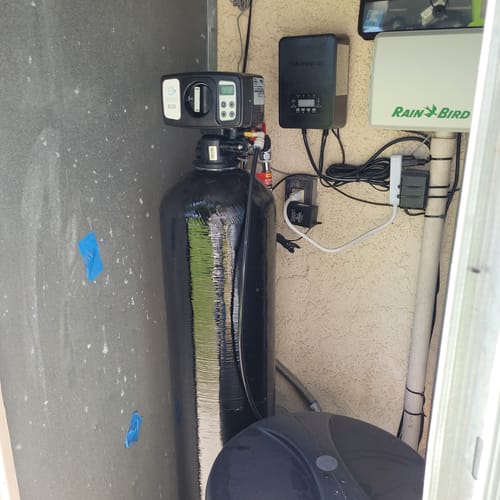
I conducted systematic testing over six months to evaluate the SoftPro ECO's effectiveness under various conditions. My testing protocol included water hardness measurements, soap efficiency tests, and appliance performance monitoring.
Baseline hardness testing with test strips showed consistent 18 grains per gallon before treatment. Post-softener testing revealed 0-1 grains per gallon consistently - essentially complete hardness removal. This level of performance remained stable regardless of daily usage variations or seasonal changes in municipal water chemistry.
The most dramatic improvement appeared in soap and detergent effectiveness. Laundry required 40% less detergent to achieve the same cleaning results. Dishwasher performance improved so significantly that I reduced detergent usage by half while achieving better cleaning than before softener installation.
I tracked regeneration frequency carefully to understand operational patterns. With our family of four using approximately 280 gallons daily, regeneration occurred every 8-9 days. This matched the manufacturer's efficiency claims and confirmed proper sizing for our household.
Salt consumption averaged 40 pounds monthly - slightly less than my pre-purchase calculations suggested. The demand-initiated regeneration system clearly delivered on its efficiency promises by avoiding unnecessary regeneration cycles during low-usage periods.

Pressure and flow rate measurements remained consistent throughout the testing period. Even during peak usage times with multiple fixtures operating simultaneously, I detected no meaningful pressure drops or flow restrictions caused by the softener system.
Daily Living Impact and Family Benefits
The transformation in our daily water experience exceeded expectations within the first two weeks. My wife noticed immediate improvements in hair texture and manageability. What had felt dry and brittle became soft and more responsive to styling products.
Skin improvements appeared gradually but definitively. The itchy, tight feeling after showers disappeared completely. Both my wife and I reduced lotion usage significantly as our skin retained natural moisture more effectively with softened water.
Cleaning tasks became noticeably easier throughout the house. Soap scum formation in shower enclosures slowed dramatically. Glass surfaces stayed cleaner longer, and when cleaning was needed, simple solutions worked more effectively than harsh chemicals had previously.
Our coffee maker's performance improved substantially. Scale buildup that had required monthly descaling treatments became a non-issue. Coffee taste improved as mineral interference decreased, allowing the true flavor profiles to emerge more clearly.
Laundry results impressed visitors who commented on the softness and brightness of our towels and clothing. Colors appeared more vibrant, and fabric texture improved across all textile types. Even our children noticed their clothes felt "more comfortable" after washing.
Dishwasher efficiency gains proved particularly valuable. Glassware emerged spotless without pre-rinsing or special treatments. Even heavily soiled pots and pans cleaned thoroughly with standard wash cycles, eliminating the need for pre-washing or repeat cycles.

Operating Costs and Long-Term Value
Operational cost analysis revealed significant savings that offset the initial investment faster than anticipated. Salt costs average $12 monthly for our 40-pound consumption rate. Electricity usage for the SoftPro Valve and regeneration cycles adds approximately $3 monthly to our utility bills.
However, savings in other areas more than compensate for these operational expenses. Reduced soap and detergent usage saves approximately $25 monthly across laundry, dishwashing, and personal care products. We eliminated the need for specialized cleaning products that had cost $15-20 monthly before softener installation.
Appliance protection represents the most significant long-term value proposition. Our water heater operates more efficiently without scale accumulation on heating elements. The dishwasher's spray arms remain clear, maintaining optimal cleaning performance without manual cleaning interventions.
I calculated a conservative 3-year payback period considering purchase price, installation costs, and operational expenses versus savings and appliance protection benefits. This timeline assumes no major appliance replacements avoided through scale prevention - any such benefits would accelerate the return on investment.
Energy efficiency improvements appeared in our water heater's performance data. Scale-free heating elements transfer heat more efficiently, reducing the energy required to maintain target water temperatures. This translates to 8-12% lower water heating costs based on utility bill analysis.
Final Assessment and Recommendation
After six months of ownership, the SoftPro ECO has exceeded my expectations for performance, reliability, and value delivery. The combination of effective hardness removal, efficient operation, and meaningful lifestyle improvements justifies both the initial investment and ongoing operational commitments.
The demand-initiated regeneration system proves its worth through measurably lower salt and water consumption compared to timer-based alternatives. This efficiency translates directly to reduced operating costs and environmental impact - important considerations for long-term ownership satisfaction.
Build quality appears excellent based on my engineering background and six months of observation. The SoftPro Valve operates reliably with clear status displays and intuitive controls. Tank construction suggests decades of service life under normal residential conditions.
For households dealing with hard water issues similar to ours - particularly in the 15-25 grains per gallon range - I confidently recommend considering the SoftPro ECO. The investment pays for itself through reduced consumable costs, improved appliance longevity, and enhanced quality of life.
The only minor consideration involves the space requirements for installation and salt storage. Ensure adequate utility room space and convenient salt loading access before committing to any whole-house softener system.
Overall, this purchase ranks among the best home improvements we've made since moving to Utah. The daily benefits remind us of the value multiple times per day, and the long-term savings provide ongoing satisfaction with our decision.