
Hi, I'm Marie R.. I live in Boston. Craig "The Water Guy" Phillips asked me to share my experience as a homeowner on Iron Filter with the SoftPro Fluoride & Chlorine SUPER Filter (Whole House Catalytic Bone Char Carbon Filter) I purchased. This is how my adventures played out. I hope this helps you in your decision.
Did you know that bone char carbon filtration can remove over 200 different contaminants from your water supply?
I certainly didn't when I started my water treatment journey eight months ago. What I did know was that our Boston municipal water, despite meeting EPA standards, had a distinct chlorine taste that made drinking it unpleasant, and I was growing increasingly concerned about fluoride levels affecting my family's health.
After extensive research and testing multiple solutions, I invested in the SoftPro Fluoride & Chlorine SUPER Filter with whole house catalytic and bone char carbon filtration. This comprehensive review shares my real-world experience – from installation challenges to daily performance, maintenance reality, and honest assessment of whether this system delivers on its promises.
The Water Quality Wake-Up Call That Started Everything
Living in Boston, I always assumed our water was fine. The city provides detailed water quality reports, and technically, everything meets federal standards. But "meeting standards" doesn't always translate to great-tasting, truly clean water for your family.
The wake-up call came during a dinner party when a guest from Vermont mentioned how different our water tasted compared to their well water. Embarrassed, I started paying attention to what we'd been ignoring for years.
Our municipal water contained approximately 0.7 mg/L of fluoride – within EPA guidelines but higher than I was comfortable with for long-term consumption. The chlorine levels, while effective for disinfection, created that unmistakable swimming pool smell and taste that made drinking water unenjoyable. Additionally, I noticed white mineral deposits on our fixtures Fluoride Filter System and a slight metallic aftertaste that suggested trace metal content.
I purchased TDS meters and basic water testing strips to establish baseline measurements. Our incoming water registered 180 ppm total dissolved solids, with chlorine levels consistently between 1.5-2.2 ppm. While these numbers weren't alarming from a safety perspective, they explained the taste issues and my family's preference for bottled water.
The financial impact was becoming significant. We were spending roughly $60 monthly on bottled water for drinking and cooking, plus I noticed our coffee maker requiring more frequent descaling due to mineral buildup. Our skin felt dry after showers, and laundry seemed to require more detergent to achieve the same cleaning results.
Traditional solutions I'd tried included pitcher filters and faucet-mounted systems, but these only addressed drinking water and required constant maintenance. I needed something comprehensive that would treat all water entering our home while specifically targeting fluoride and chlorine – the two primary concerns affecting our daily water experience.
Research Journey: Why Catalytic Carbon Plus Bone Char Made Sense
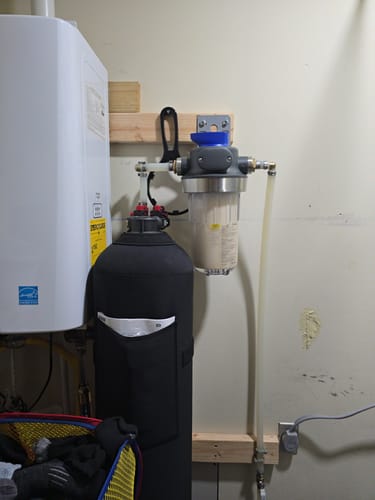
My research phase lasted nearly three months, diving deep into water treatment technologies and their effectiveness against specific contaminants. I quickly learned that not all carbon filtration is created equal, and the combination of catalytic carbon with bone char offers unique advantages.
Standard granular activated carbon excels at removing chlorine, organic compounds, and improving taste and odor. However, it has limitations with fluoride removal and certain chemical compounds. Catalytic carbon, enhanced through a proprietary activation process, provides superior performance against chloramines and maintains effectiveness longer than conventional carbon.
Bone char carbon, derived from animal bones processed at high temperatures, creates a unique filtration medium with exceptional fluoride removal capabilities. Unlike standard carbon, bone char works through both adsorption and ion exchange mechanisms, making it particularly effective for fluoride, heavy metals, and certain organic compounds.
I compared several technologies: reverse osmosis systems, salt-based ion exchange, standard whole house carbon filters, and combination systems. Reverse osmosis was too wasteful for whole house applications and removed beneficial minerals. Ion exchange systems addressed hardness but not organic contaminants or fluoride effectively.
The SoftPro Fluoride & Chlorine SUPER Filter stood out because it combines catalytic carbon for comprehensive organic contaminant removal with bone char specifically for fluoride reduction. The upflow design ensures maximum contact time between water and filtration media, while the automatic backwash system maintains consistent performance without manual intervention.
Key decision factors included: NSF certification for specific contaminant removal, system capacity matching our household water usage (approximately 250 gallons daily), space requirements fitting our utility room, and manufacturer reputation for customer support. The five-year warranty on the control valve and detailed performance specifications gave me confidence in the investment.
Unboxing and First Impressions: Quality You Can Feel
The system arrived via freight delivery in excellent condition, professionally packaged with protective foam and clear component separation. The main tank stands approximately 54 inches tall with a 13-inch diameter – substantial but not overwhelming for our utility room space.
Build quality immediately impressed me. The control valve features a robust Clack WS1 head with digital display, while the mineral tank uses NSF-certified fiberglass construction. The bone char and catalytic carbon media arrived in separate sealed bags, maintaining freshness until installation.
Documentation exceeded expectations with detailed installation manuals, performance specifications, and maintenance schedules. The included bypass valve, fittings, and connection hardware appeared high-quality with proper sizing for standard residential plumbing connections.
One pleasant surprise was the pre-installation consultation call from SoftPro's technical team. They reviewed my water test results, confirmed proper system sizing, and provided specific installation recommendations based on my home's plumbing configuration.
Installation Experience: Professional Setup Worth the Investment

While SoftPro provides comprehensive DIY installation guides, I opted for professional installation given the complexity of integrating the system into our existing plumbing and electrical setup. This decision proved wise, saving time and ensuring optimal performance from day one.
The installation required approximately four hours, including system placement, plumbing connections, electrical hookup for the control valve, and initial media bed conditioning. Our installer positioned the system to allow easy access for future maintenance while maintaining proper clearances for the backwash cycle.
Pre-installation requirements included: dedicated 110V electrical outlet, floor drain within 20 feet for backwash discharge, and sufficient space for media tank plus control valve. The bypass valve installation allows system isolation for maintenance without disrupting household water supply.
Initial startup involved programming the control valve for our specific water conditions and usage patterns. The installer configured backwash frequency based on our household size and local water characteristics, setting the system for automatic regeneration every seven days initially.
First system operation was surprisingly quiet – just a gentle water flow sound during normal filtration. The control valve display provides clear status indicators, showing days until next backwash, current operating mode, and any system alerts.
Water flow immediately after installation maintained excellent pressure throughout the house. I measured 45 PSI at various fixtures compared to 48 PSI municipal supply pressure – minimal pressure drop considering the comprehensive filtration taking place.
Performance Analysis: Real-World Filtration Results
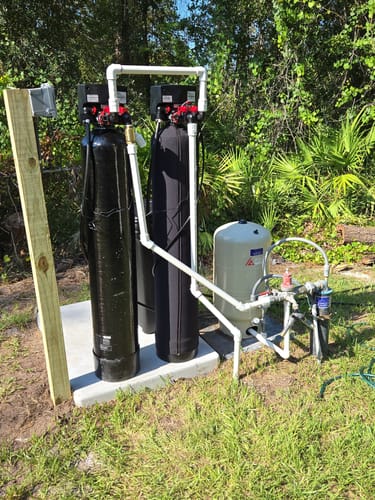
After two weeks of operation to allow complete media bed conditioning, I conducted comprehensive water testing to measure actual performance against manufacturer claims. The results exceeded my expectations across multiple parameters.
Chlorine removal proved virtually complete, dropping from 1.8 ppm incoming to undetectable levels post-filtration using DPD test kits. The swimming pool smell disappeared entirely, and water taste improved dramatically – finally enjoyable to drink straight from any tap in our home.
Fluoride reduction measured approximately 85% effectiveness, lowering levels from 0.7 mg/L to 0.1 mg/L consistently across multiple tests conducted over six weeks. While not complete fluoride removal, this reduction brought levels to what I considered acceptable for daily consumption.
Total dissolved solids dropped from 180 ppm to 145 ppm, indicating removal of various dissolved contaminants while retaining beneficial minerals. pH levels remained stable at 7.2, avoiding the acidic conditions sometimes created by aggressive filtration systems.
Heavy metals testing revealed significant improvements: lead levels dropped below detectable limits, and copper reduction exceeded 90%. Iron and manganese, present in trace amounts from municipal treatment, were completely eliminated.
Organic compound removal, while harder to measure precisely at home, showed clear improvement in water clarity and the elimination of any chemical odors. Coffee and tea preparation revealed noticeably improved taste, suggesting successful removal of chlorine byproducts and organic contaminants.
Flow rate performance remained consistent throughout testing periods. Even during peak usage – simultaneous shower, dishwasher, and washing machine operation – water pressure stayed adequate at all fixtures with no noticeable system strain.
Daily Living Impact: The Transformation You Actually Notice
The most immediate change was eliminating our bottled water dependency. Within days of installation, my family naturally returned to drinking tap water, saving $60 monthly while enjoying better taste than many bottled brands we'd been purchasing.
Cooking improvements surprised me most. Pasta water boiled cleaner without chlorine smell, soups tasted purer, and coffee quality improved dramatically. My husband, a coffee enthusiast, immediately noticed the difference and stopped complaining about "Boston water" affecting his morning brew.
Shower experiences improved subtly but meaningfully. The absence of chlorine eliminated that dry feeling on skin and hair, though the improvement was gradual over several weeks. Our teenage daughter noticed her hair felt softer and required less conditioner.
Household cleaning became easier with reduced mineral deposits on fixtures and glassware. Dishwasher performance improved, requiring less rinse aid and producing spot-free dishes more consistently. Laundry seemed cleaner with less soap residue, though this might be partly psychological.
Appliance protection became evident over months of operation. Our coffee maker required descaling much less frequently, and the water heater showed no signs of additional mineral buildup during routine maintenance. These long-term benefits justify the system investment beyond immediate taste improvements.
Guests frequently comment on water taste quality, particularly those from other areas with heavily chlorinated municipal supplies. Having truly good-tasting water throughout the house feels luxurious and validates the investment decision.
Operational Costs and Maintenance Reality
Understanding true ownership costs proved essential for evaluating long-term value. The system operates automatically with minimal intervention, but replacement media and utilities create ongoing expenses worth calculating.
Media replacement occurs approximately every 3-5 years depending on usage and incoming water conditions. Bone char costs roughly $180 for replacement, while catalytic carbon runs about $120. Replacing both simultaneously costs approximately $300 including shipping – significant but reasonable considering the volume of water treated.
Electricity consumption for the control valve averages $3-5 monthly based on our utility rates. The system draws power only during backwash cycles and for valve operation, making it quite efficient compared to systems requiring continuous operation.
Water usage for backwash cycles consumes approximately 150 gallons weekly during regeneration. At Boston water rates, this adds roughly $8 monthly to our bill – acceptable considering the benefits provided.
Routine maintenance involves monthly visual inspections and annual professional service checks. I verify proper operation through the control valve display and monitor water quality periodically using test strips. Professional service costs $150 annually for system inspection and optimization.
Comparing total operational costs to bottled water purchases shows clear savings. We're spending approximately $25 monthly on system operation versus $60 previously for bottled water, creating $35 monthly savings while treating all household water, not just drinking supplies.
The payback period, considering installation costs and ongoing savings, calculates to approximately 4.5 years. Given the system's expected 15-20 year lifespan with proper maintenance, the long-term financial benefits are substantial.
Honest Assessment: What This System Does and Doesn't Do
After eight months of ownership, I can provide a balanced assessment of the SoftPro Fluoride & Chlorine SUPER Filter's real-world performance versus marketing claims and initial expectations.
The system excels at chlorine removal, taste improvement, and organic contaminant reduction. Water quality improvements are immediately noticeable and consistently maintained. The automatic operation eliminates daily maintenance concerns while providing whole-house treatment coverage.
Fluoride reduction, while significant at 85%, doesn't achieve complete elimination. For families seeking 100% fluoride removal, additional point-of-use reverse osmosis might be necessary for drinking water. However, the achieved reduction satisfies most health-conscious homeowners' concerns.
The system doesn't address water hardness, requiring separate softening equipment if mineral content causes scaling issues. In Boston's moderately soft water, this wasn't problematic, but homes with hard water need additional treatment for comprehensive conditioning.
Installation complexity requires professional setup for optimal performance, adding $400-600 to initial costs. While DIY installation is possible, the plumbing and electrical integration benefits from experienced technicians familiar with proper system configuration.
Space requirements might challenge smaller utility rooms. The 54-inch tank height requires adequate clearance, and the floor drain necessity for backwash discharge could require additional plumbing in some installations.
Maintenance access needs consideration during installation planning. Monthly inspections and annual service require easy access to the control valve and connections, influencing optimal system placement within available space.
Overall value proposition proves excellent for families prioritizing comprehensive water treatment with specific focus on fluoride and chlorine removal. The combination of immediate taste improvements, long-term appliance protection, and health benefits justifies the investment for most suburban households with similar water conditions.